
%20(1).avif)
In every Indian wedding, all attention is on the bride and groom. However, an experienced event planner knows that the real profits come from: tent suppliers, caterers, decorators, jewellery rental companies, and photographers.
No matter which couple marries, these businesses profit.
Stock markets operate similarly. Investors often pursue visible winners, but the greatest wealth is typically generated by companies quietly supporting each winner.
That is the essence of Proxy Investing — not betting on the star, but owning the businesses that make the star possible. The Rarely Discussed Mental Model That Creates Multi-baggers. In investing, the biggest returns rarely come from buying the obvious winners. They often come from investing in the ecosystem around the winners.
In India, this mental model is playing out across multiple sectors — capital goods, chemicals, manufacturing, packaging, engineering, and platform ecosystems.
Proxy investing involves putting your money into "picks and shovels" businesses—companies that provide the essential products, services, or infrastructure needed for a significant industry boom.
These businesses typically:
➯ Face less competition
➯ Have a diversified customer base
➯ Enjoy operating leverage during industry upcycles
➯ Benefit even if the industry's leading company changes
During the California gold rush, miners competed fiercely for gold. However, the real fortunes were made by companies that sold tools, jeans, and other supplies.
Markets have not changed. Only industries have.
Proxy investing works because profit pools in an industry are rarely evenly distributed.
Often:
As shown in the SOIC research examples, suppliers such as refractory producers or component manufacturers sometimes outperform core industry players over long periods because they benefit from multiple customers simultaneously.
If the steel cycle is improving, most investors would buy steel companies.
However, the companies that provide materials for the furnaces used in steel production benefit from the expansion of the steel industry worldwide, not just one company.
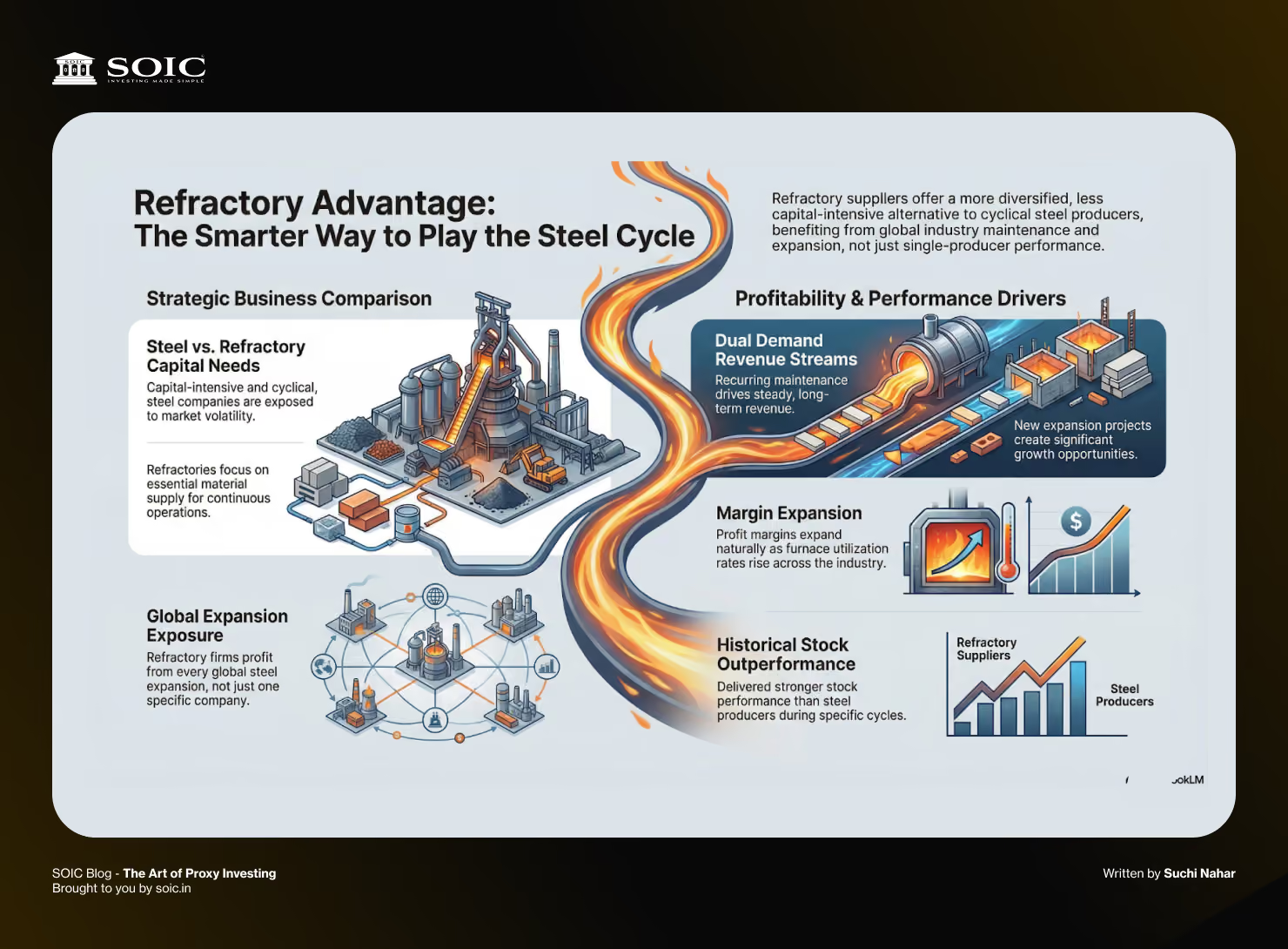
Proxy companies - RHI Magnesita, IFGL, Vesuvius (Have to create an infographic)
Example insight:
Auto companies tend to suffer from:
However, the companies that provide components to the auto industry tend to benefit from:
Auto component manufacturers tend to perform much better than the actual manufacturers of the cars.

Pharma companies tend to suffer from:
However, the companies that provide intermediates, solvents, and inputs used in the Contract Research, Manufacturing, and Analysis services tend to benefit from multiple pharma companies at the same time.
This means that the companies that provide the inputs tend to perform much better than the actual pharma companies.
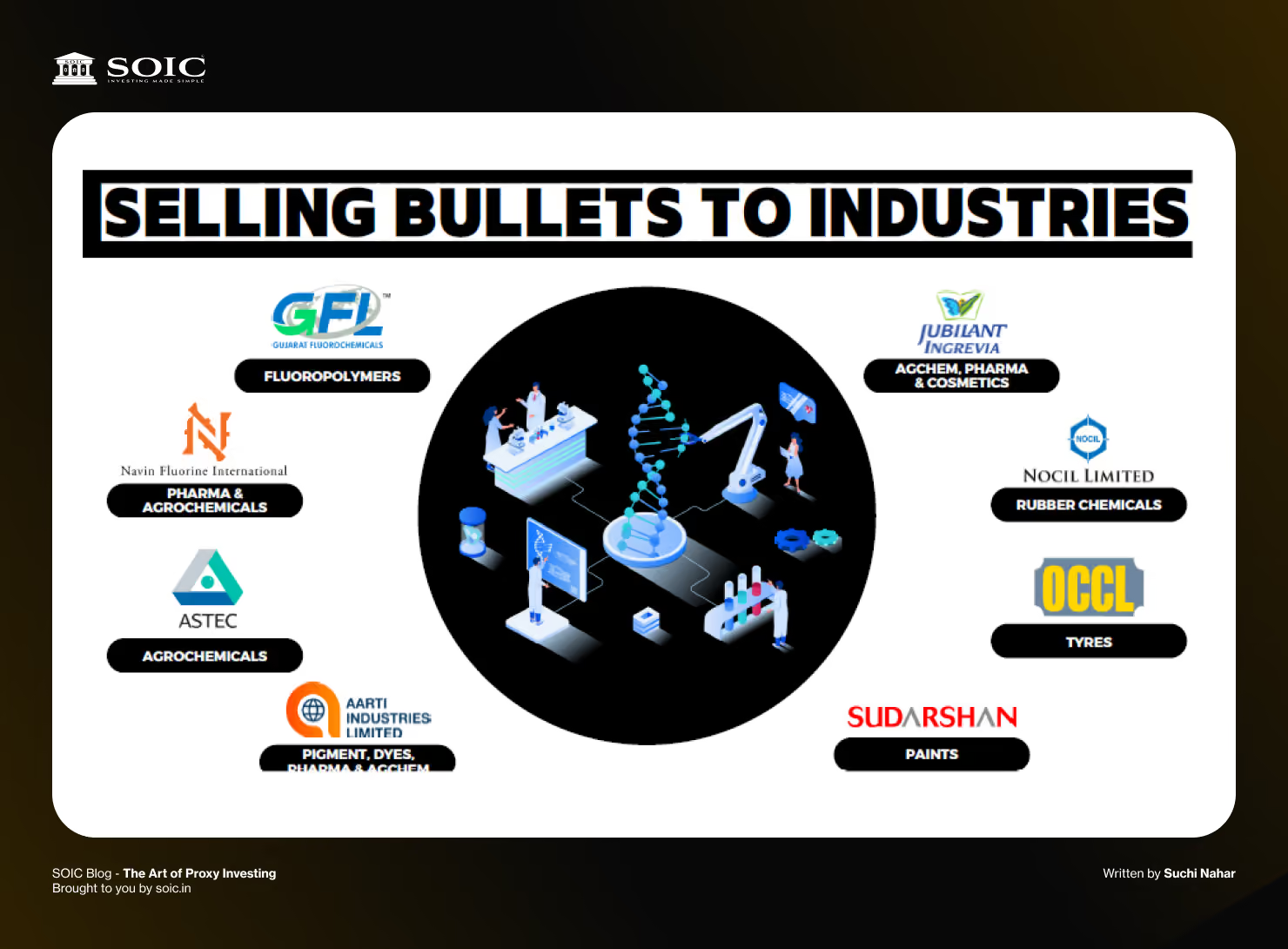
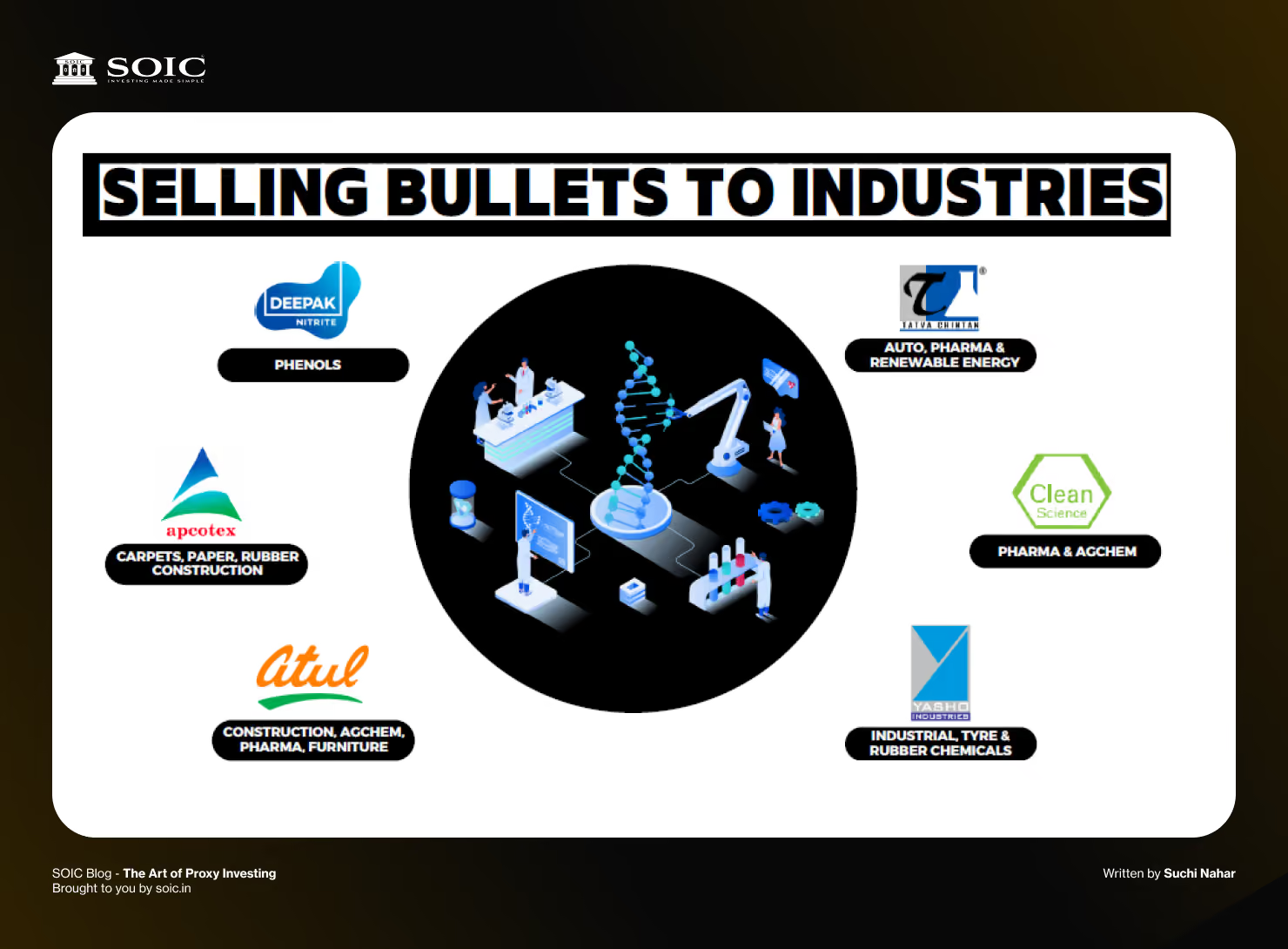
Many Indian specialty chemical companies became multi-baggers by being ecosystem suppliers rather than end-product pharma brands.
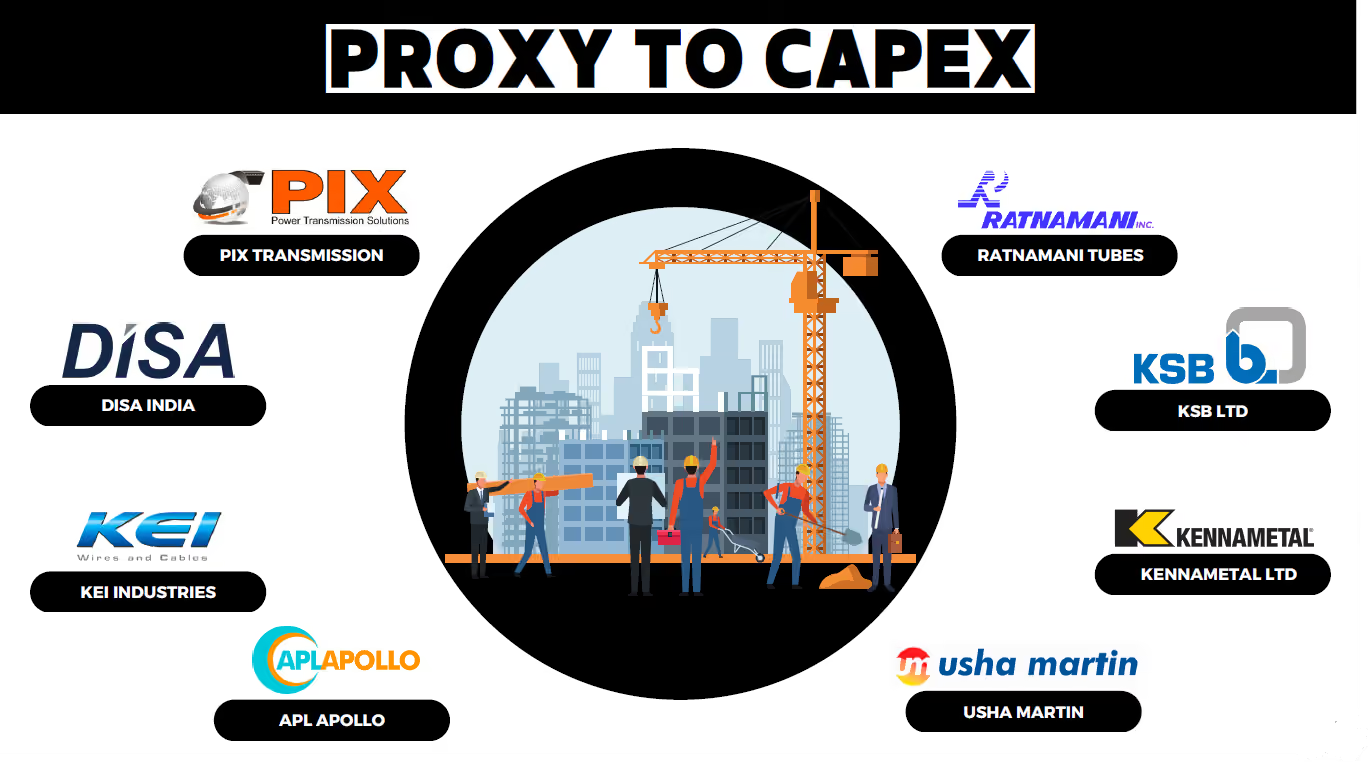
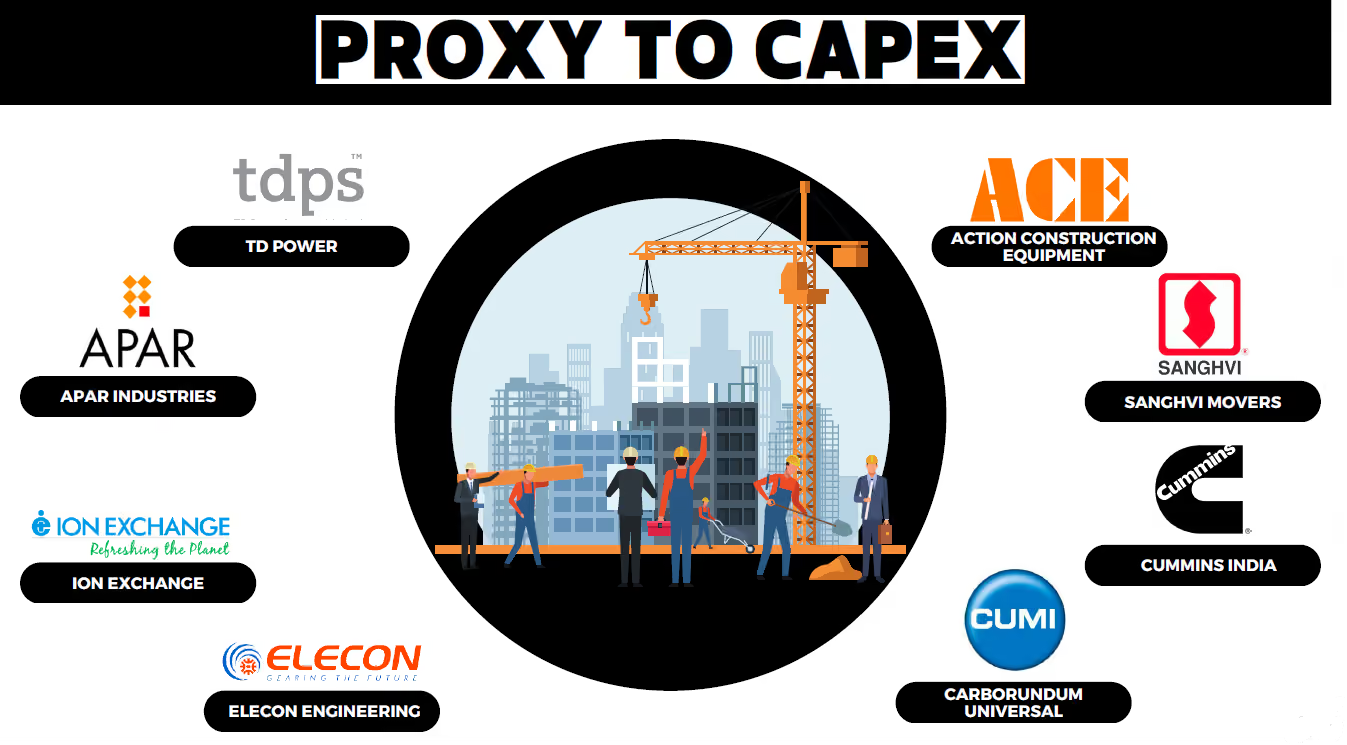
Because every infra project needs machinery, these companies benefit regardless of which EPC contractor wins the project. The capital-goods beneficiaries often outperform during investment-led economic cycles.
Another notable observation which is often discussed within investment circles is that you may be able to get into the proxy companies one or two quarters after the start of the theme. This is simply due to the fact that the market will first recognise the winners of the theme and then gradually start to recognise the ecosystem players.
Typical cycle:
This delayed recognition creates lower-risk entry opportunities.
How Proxy Investing Will Become Even More Powerful in the Future
There are three structural shifts which are making proxy investing even more powerful.
The first one is the "Platform Economies," wherein the value chain for every theme will get deeper and deeper.
The second one is "Global Supply Chain Reconfig," wherein the "China+1" manufacturing shift will cause supplier ecosystems to emerge in India for things like precision engineering and specialty chemicals.
The third one is "Investment Led Growth Cycle," wherein India will enter a decade of capex growth wherein the suppliers may see better earnings visibility than the end-product companies themselves.
Before investing in a theme, ask:
Step 1 — Identify the Theme
EV, Railways, Infra, Pharma, AI, Defense, Manufacturing
Step 2 — Map the Value Chain
Raw materials
Components
Equipment
Software
Logistics
Maintenance
Step 3 — Identify Supplier Concentration
Who supplies to multiple leaders?
Step 4 — Look for Operating Leverage
Step 5 — Enter After Early Theme Rally
Let the market discover the theme first.
Wait for the market to discover the theme first
"Industries create winners; ecosystems create compounding machines."
The investor who learns to see behind the headlines to understand the true suppliers will reap the biggest asymmetric opportunities. The next multi-bagger might not be the one everyone is talking about. It might be the one that everyone is talking about that the multi-bagger is supplying.
Extending the Proxy Investing Framework into Actionable Themes
After understanding the philosophy of proxy investing, the next step is building a structured proxy-theme playbook — identifying sectors where indirect beneficiaries may compound faster than the obvious leaders.
India is about to enter a manufacturing + capex + formalisation + financialisation decade, making the proxy investing opportunity much more powerful than it was in the past.
Below are the high-probability proxy themes for the upcoming decade along with the rationale behind them.
Theme: Rising gold monetisation, gold loans, and financial gold penetration
India holds one of the world’s largest household gold stocks. As formal finance penetrates deeper into semi-urban and rural India, gold is increasingly becoming a financial asset rather than just a consumption asset.
Instead of betting directly on gold prices, investors can look at institutions monetizing gold demand.
Proxy beneficiaries
Examples of proxy thinking:
This is a classic proxy:
Not betting on gold price → betting on the financing activity around gold.
Structural tailwinds:
Theme: Global AI capex expansion
Instead of only betting on global AI platform companies, Indian proxy beneficiaries could include:
Key insight: Every AI boom requires servers, power, cooling, connectivity, and chip ecosystem manufacturing.
Theme: Global supply-chain diversification. Instead of investing only in final exporters:
Proxy beneficiaries
These companies benefit across multiple exporting sectors simultaneously, creating diversified demand.
Theme: Electrification of mobility
Rather than only investing in EV OEMs:
Proxy opportunities
Suppliers often benefit regardless of which OEM becomes dominant.
Theme: India’s investment-led growth decade
Instead of EPC contractors alone:
Proxy beneficiaries
Capex cycles historically create multi-year operating leverage for suppliers.
Theme: Defence indigenisation
Instead of only defence PSUs:
Proxy ecosystem
Defence supply chains create long-term annuity-type order flows.
Theme: Global pharma outsourcing expansion
Proxy beneficiaries:
These benefit from global drug pipelines, not just one drug success.
Theme: Shift from an unorganised to an organised economy
Proxy companies:
These businesses benefit from multiple industries formalising simultaneously.
Step 1 — Identify a Mega Theme
Gold financialisation
EV adoption
Manufacturing shift
Capex cycle
Defense indigenisation
AI capex
Step 2 — Map the Value Chain
Who supplies:
Step 3 — Identify Multi-Customer Suppliers
Companies supplying many winners simultaneously often compound faster.
Step 4 — Watch Earnings Before Price
Proxy rallies typically start after demand visibility improves, often 1–2 quarters after the core theme rallies.
Step 5 — Look for Operating Leverage Businesses
Rising utilisation → rising margins → earnings surprise → rerating
Many investors chase stories.
Great investors chase ecosystems.
Themes create excitement.
Supply chains create compounding.
Gold prices may fluctuate — but gold financing activity grows structurally.EV leaders may change — but component suppliers benefit across brands. Infra developers may rotate, but equipment suppliers benefit every year.
Think of this as a mental Google Map for investors:
Start from a Mega Theme → Move across the value chain → Identify proxy segments → Spot listed opportunities.
This framework helps investors move from headline thinking → ecosystem thinking.
Theme: Gold monetisation, rising gold prices, secured rural lending
Value chain
Gold demand → Collateral → Lending → Distribution → Storage → Insurance
Proxy segments
Theme: Infrastructure, railways, urbanisation, industrial expansion
Value chain
Infra project → EPC contractors → Equipment → Components → Materials → Maintenance
Proxy segments
Theme: Global supply chain shift toward India
Value chain
Global OEM → Indian contract manufacturer → Tooling → Precision parts → Chemicals → Logistics
Proxy segments
Theme: Electrification of mobility
Value chain
Battery → Components → Vehicle → Charging infra → Power grid
Proxy segments
5. AI & Data Center Capex Theme
Theme: Global AI infrastructure expansion
Value chain
AI software → Data centres → Servers → Cooling → Power → Connectivity
Proxy segments
Theme: Domestic defence manufacturing push
Value chain
Defence OEM → Systems → Components → Materials → Testing
Proxy segments
Theme: Global pharma outsourcing to India
Value chain
Drug discovery → Intermediates → APIs → Packaging → Clinical trials
Proxy segments
Theme: Shift from an unorganised to an organised economy
Value chain
Brand → Manufacturing → Packaging → Warehousing → Logistics → Retail
Proxy segments
Theme: Renewable energy expansion & grid modernization
Value chain
Renewable plants → Transmission → Storage → Equipment → Maintenance
Proxy segments
Step 1 - Identify Mega Theme
Step 2 - Map entire value chain
Step 3 - Find companies supplying multiple leaders
Step 4 - Look for operating leverage + capacity utilization triggers
Step 5 - Enter proxies often 1–2 quarters after theme visibility improves
Most investors ask: “Which company will win?”
Great investors ask: “Which companies will earn regardless of who wins?”
Because industries create champions, but ecosystems create compounding machines.
When investors learn to see the invisible suppliers behind visible success, they stop chasing stories — and start capturing structural wealth creation. Proxy investing shifts the focus from guessing winners to owning the entire race infrastructure.
When everyone is buying gold, the smart investor studies gold financing.
When everyone is buying EV companies, the smart investor studies EV supply chains.
When everyone is buying infrastructure developers, the smart investor studies equipment suppliers.
Because in every economic boom:
The spotlight falls on the heroes, but the real compounding happens in the companies supplying the entire battlefield. This is the essence of Proxy Investing — the art of investing in businesses that benefit from a structural theme, without directly investing in the theme leader.
Peter Lynch famously explained this during the PC revolution: instead of betting on which PC company would win, buy the companies that sell the chips and operating systems.
The next decade in India may not belong only to the companies building products. It may belong to the companies quietly enabling everyone else to build. Investors who learn to think in value chains instead of headlines will consistently discover opportunities before they become consensus.
We at SOIC have dedicated lessons on how to find Proxy Companies. You can join here to strengthen your core: https://learn.soic.in/learn/SOIC-Course
The information provided is for educational purposes only and should not be considered investment advice. We are SEBI-registered research analysts.
We believe that investment decisions should be based on personal conviction and not borrowed from external sources. Therefore, we do not assume any liability or responsibility for any investment decisions made based on the information provided in this reference.


%20(1).avif)

0 Comments