
I was sitting at a café with a friend a few months ago and we were discussing electric vehicles. The conversation went pretty much like any EV conversation.
Tesla, BYD, Tata Motors, charging stations, gigafactories, government incentives
We never once discussed the chemicals in a battery. But after going through the battery ecosystem, I found something shocking.
The EV revolution's biggest beneficiaries might not be carmakers. They may not even be the battery makers. One of the biggest beneficiaries could be companies that manufacture the unseen chemicals that power batteries.
This pattern we have seen before in history.
In the smartphone revolution, investors focused on the handset brands. The real wealth creation was deeper in the supply chain – semiconductors, manufacturing equipment, specialty materials, operating systems.
The EV revolution might go the same way.
● All electric cars have batteries.
● Chemistry powers all batteries.
● Every chemistry is based on a supply chain.
China had seen this before the rest of the world. While the rest of the world argued about electric cars, China spent two decades building dominance in lithium refining, cathodes, electrolytes, battery cells, and the manufacturing ecosystem that supports them.
Now the world is trying to catch up. → The US wants non-Chinese battery supply chains. → Europe wants energy independence. → India wants to be a serious player in battery making.
However, there is one problem. Battery factories cannot operate without battery materials, and battery materials cannot be built overnight.
This is where a relatively unknown Indian specialty chemical company enters the story.
● A company that has spent more than three decades working with lithium chemistry.
● A company that started manufacturing lithium salts long before electric vehicles became fashionable.
● A company that is now making the largest capital allocation decision in its history.
That company is Neogen Chemicals.
The question investors need to answer is simple: Can Neogen become India’s battery-materials champion, or is it making a multi-thousand-crore bet on a future that may arrive slower than expected?
To answer that question, we first need to understand what actually goes inside a battery.
Most investors think of the EV ecosystem like this:
EV Manufacturer → Battery Supplier → Customer
The reality is far more complicated.
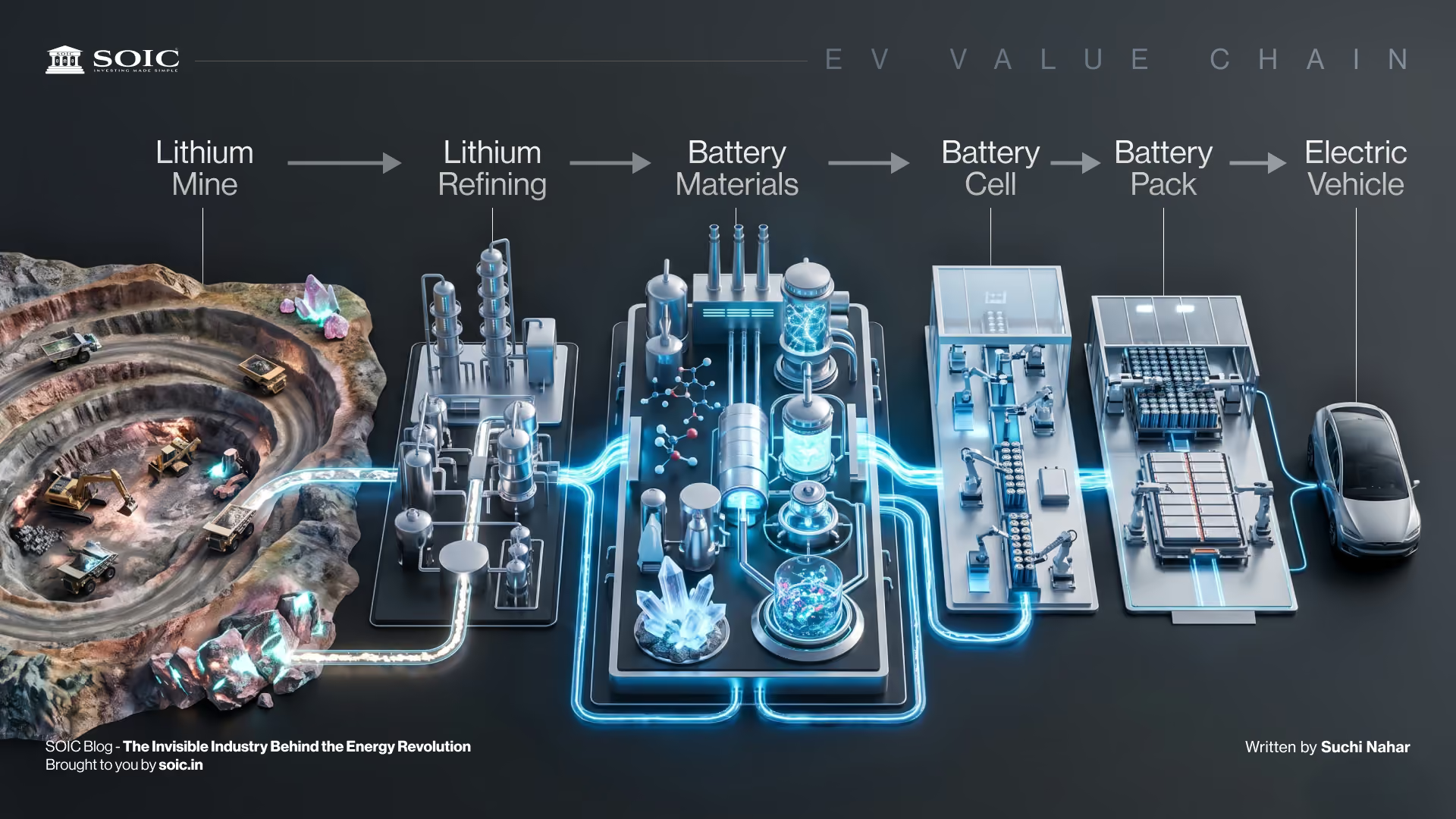
The further upstream you go, the fewer companies exist. Often, the higher the barriers become.
This is why battery chemicals have become one of the most strategic industries globally. Governments can subsidise battery factories.
Automakers can launch new EV models, but without battery materials, nothing moves. The battery industry is expected to become one of the largest manufacturing ecosystems in the world.
Why? Because batteries are no longer used only in:
• EVs
• Smartphones
• Laptops
They are now critical for:
• Grid-scale energy storage
• Data centres
• Solar storage
• AI infrastructure
• Defence applications
The world is moving from an oil economy to an electron economy. Batteries sit at the center of that transition. And battery chemicals sit at the centre of batteries.
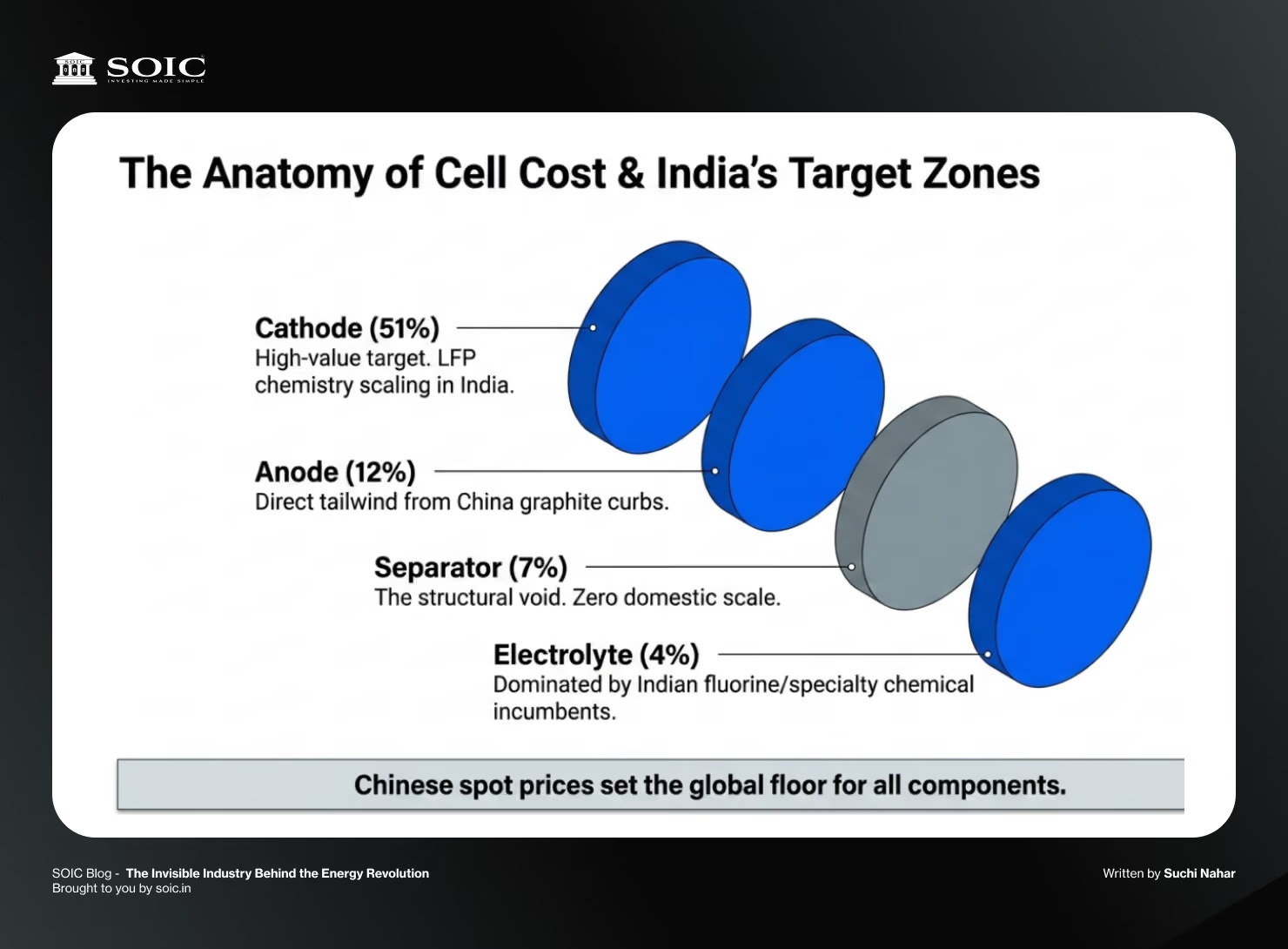
Every lithium-ion battery consists of four critical components:
1. Cathode:
The energy storage component. Usually the most expensive part of the battery. The cathode determines:
• Energy density
• Battery life
• Cost structure
Popular chemistries include:
• LFP (Lithium Iron Phosphate)
• NMC (Nickel Manganese Cobalt)
• NCA (Nickel Cobalt Aluminium)
Think of the cathode as the warehouse where energy is stored.
2. Anode:
Typically made using graphite. The anode stores lithium ions during charging and releases them during discharge.
Think of it as the receiving dock of the warehouse. Without the anode, energy cannot move efficiently.
3. Separator:
A thin membrane separating cathode and anode. Its role appears simple but is incredibly important.
If the separator fails, the battery can short-circuit. A battery worth thousands of dollars can become unusable because of a component that represents only a tiny fraction of total cost.
4. Electrolyte:
This is where our story begins.The electrolyte acts as the medium through which lithium ions travel between cathode and anode.
Think of a battery as a city. The cathode is the source of people. The anode is the destination. The separator acts like traffic control. The electrolyte is the road network.
Without roads, people cannot move. Without electrolytes, lithium ions cannot move.
No movement means no battery. This seemingly small component is where Neogen wants to build a dominant position.
When investors hear the word lithium, they usually think about lithium mines. In reality, battery performance depends far more on chemistry than mining. A modern electrolyte consists of three major components:
Lithium Salt: Typically LiPF₆ (Lithium Hexafluorophosphate).
This is the heart of the electrolyte. Without lithium salts, lithium ions cannot move.
Solvents
Examples include:
• EC (Ethylene Carbonate)
• DEC (Diethyl Carbonate)
• EMC (Ethyl Methyl Carbonate)
These dissolve the lithium salt.
Additives
Tiny quantities. Huge impact.
Additives influence:
• Battery life
• Fast charging capability
• Safety
• Temperature performance
Together, these ingredients create the electrolyte. A carefully engineered chemical cocktail that determines how a battery behaves.
Small formulation changes can alter:
• Charging speed
• Cycle life
• Safety
• Range
This is why battery manufacturers spend years qualifying suppliers. Changing an electrolyte supplier is not like changing a packaging vendor.
• Every change requires testing.
• Validation.
• Reliability checks.
• Safety approvals.
• This creates one of the most attractive characteristics in specialty chemicals:
• Sticky customers.
• Once qualified, suppliers can remain embedded for years.
This is precisely the opportunity Neogen is chasing.
To understand Neogen's opportunity, we need to understand China's dominance.
Today, China controls a substantial share of:
• Lithium refining
• Cathode materials
• Electrolyte production
• Battery cell manufacturing
This dominance did not happen overnight.
China spent decades investing across every layer of the value chain. The result is a battery ecosystem that few countries can currently replicate. However, geopolitics has changed the game.
Governments increasingly want alternative supply chains. The United States has introduced FEOC regulations that progressively remove Chinese-controlled battery inputs from subsidy-eligible supply chains. This creates a structural shift.
Historically:
China → Lowest Cost → Wins
Now:
China → Potentially Disqualified
Battery manufacturers are no longer seeking only the cheapest supplier. They are seeking qualified non-Chinese suppliers. This distinction may become one of the biggest opportunities for Indian battery-material companies over the next decade.
Neogen is positioning itself right at the centre of this shift.
India's Battery Materials Inflection Point & The Rise of Neogen
"The biggest fortunes are often made in industries nobody notices until it is too late."
In the late 1990s, most investors focused on internet companies. Very few studied fibre-optic cable manufacturers.
In the 2000s, most investors focused on mobile phone brands, Very few studied semiconductor equipment companies. In the 2010s, most investors focused on cloud software. Very few studied data centres.
The pattern repeats.
Investors are naturally attracted to the visible layer of an industry, but wealth creation often happens in the invisible layers. Today, electric vehicles are visible. Battery materials are not. And that is exactly why they deserve attention.
For the last three years, India's battery materials story was largely a story of announcements.
Companies announced:
• Electrolyte plants
• LiPF6 capacities
• Anode projects
• Cathode ambitions
• Gigafactories
• Technology partnerships
Investors were effectively buying optionality.
• Most projects were still PowerPoint presentations.
• Most revenues were still projections.
• Most customer relationships were still in discussions.
• FY26 appears to be the year when this started changing.
• Several battery material companies crossed a critical milestone.
• They moved from announcements to invoices.
• Commercial sales started.
• Qualifications advanced.
• Pilot plants became commercial facilities.
• Customers started testing products.
• The battery-material ecosystem stopped being theoretical.
And became real.
This transition is arguably the most important development in India's EV ecosystem over the last two years because factories can be announced, capacities can be announced. Only customers create businesses.
Ask ten investors what drives battery-material demand. Most will answer: "Indian EV growth."
That answer sounds logical. It is also incomplete.
One of the most important insights from recent conference calls across the battery-material ecosystem is that near-term demand may not come from India at all. It may come from exports. This changes the investment framework completely.
Instead of asking: “How many EVs will India sell?
Investors should ask: “How much of the global battery supply chain can India capture?”
These are very different questions.
The second question leads to a much larger opportunity. It explains why companies like Neogen are building capacities that appear oversized relative to India's current battery manufacturing ecosystem. They are not building only for India. They are building a world actively looking for alternatives to China.
To understand Neogen's opportunity, we must understand China's dominance.
China spent two decades building capabilities across:
• Lithium refining
• Cathode materials
• Anode materials
• Electrolytes
• Battery cells
The result is extraordinary.
China today effectively sets the global benchmark across much of the battery-material ecosystem.
Chinese prices often become global prices. Chinese capacity often determines industry profitability.
Chinese oversupply often determines industry cycles.
For years, this created a simple equation:
China = Lowest Cost = Preferred Supplier
That equation is now changing. Geopolitical concerns have transformed battery materials from an industrial topic into a strategic topic.
Governments no longer view batteries as ordinary products. They view them as critical infrastructure.
This shift has created one of the biggest opportunities for non-Chinese suppliers in decades.
Perhaps the most important acronym in the battery industry today is FEOC- Foreign Entity of Concern. Under evolving US regulations, battery supply chains are gradually being pushed away from Chinese-controlled inputs. For years, China+1 was merely a procurement strategy. Today it is becoming a boardroom mandate.
This is a profound shift, because cost is no longer the only consideration.
• Qualification matters.
• Supply security matters.
• Geography matters.
• Reliability matters.
This creates a rare window of opportunity for countries like India, and companies like Neogen.
The Indian battery ecosystem is still young. But it is already becoming specialised.
Each company is targeting a different layer of the value chain.
Gujarat Fluorochemicals (GFCL EV)
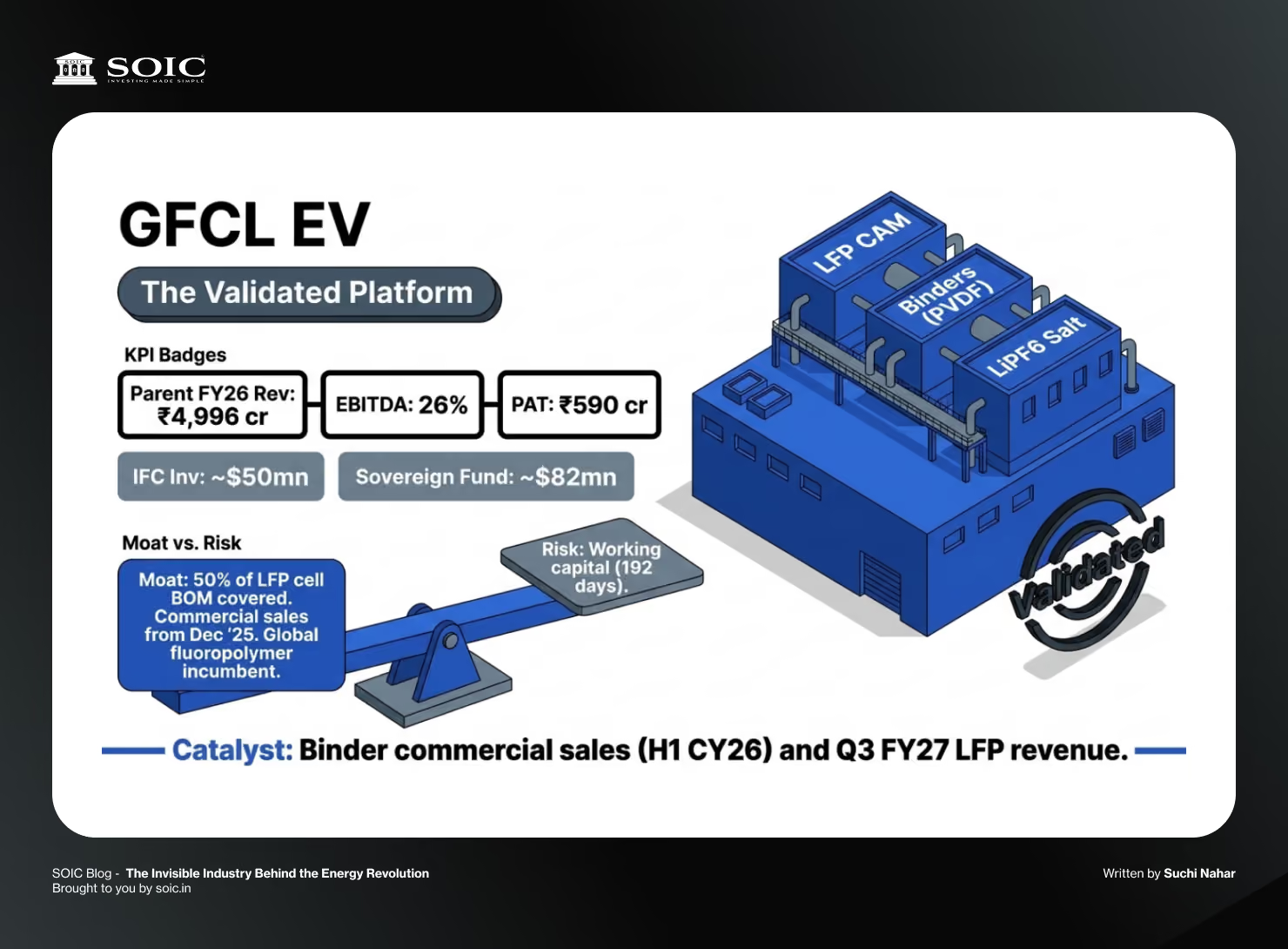
Perhaps the most advanced battery-material platform in India today.
Products include:
• LiPF6
• Electrolytes
• LFP Cathode Materials
• Binders
• Anode Material
Commercial LiPF6 sales started in December 2025. Repeat orders have already been received.
Himadri Speciality
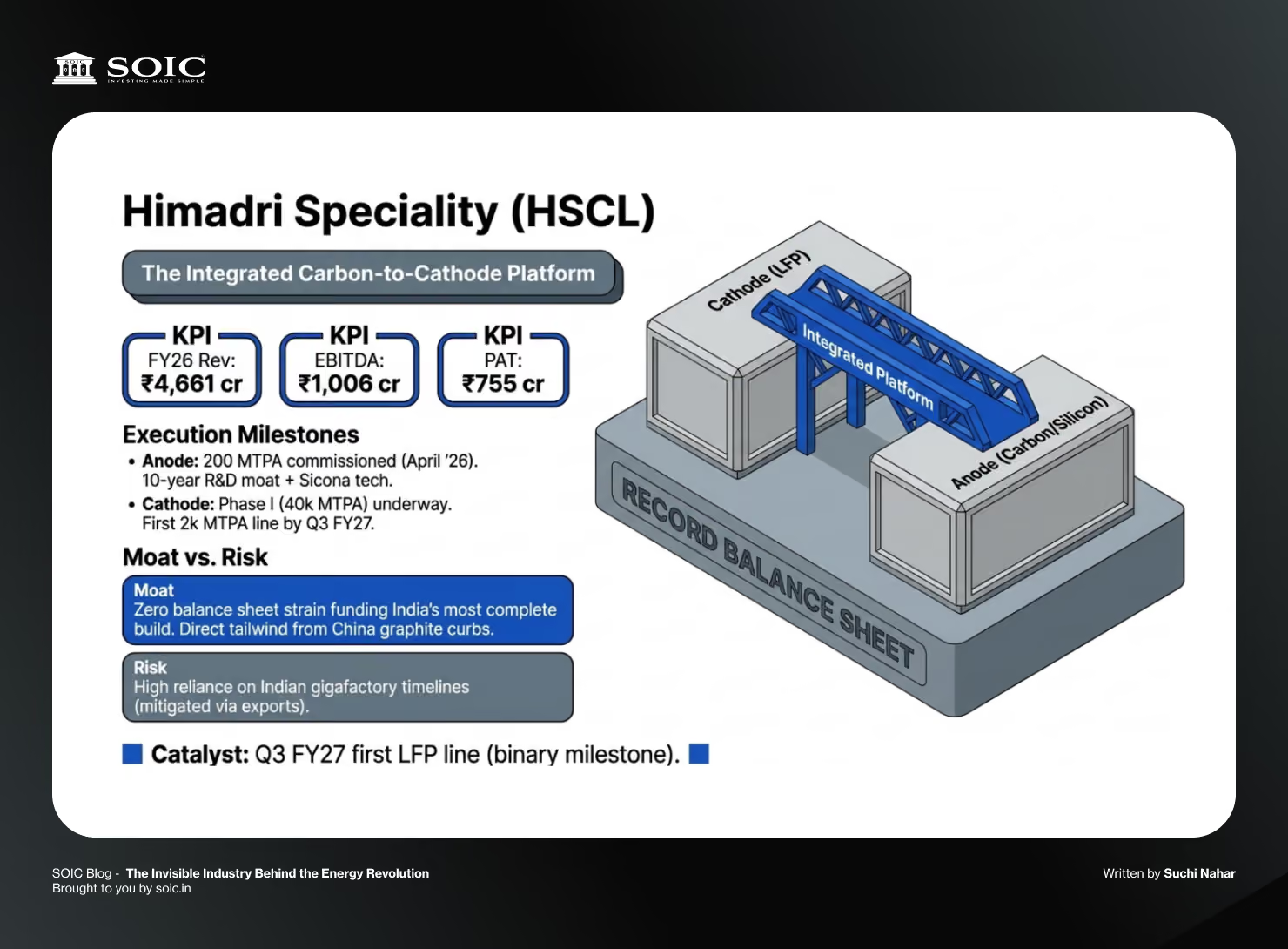
Focused primarily on:
• Synthetic graphite
• Anode materials
• Carbon products
• Cathode active material ambitions
Anode materials represent one of the largest localisation opportunities in India.
PCBL
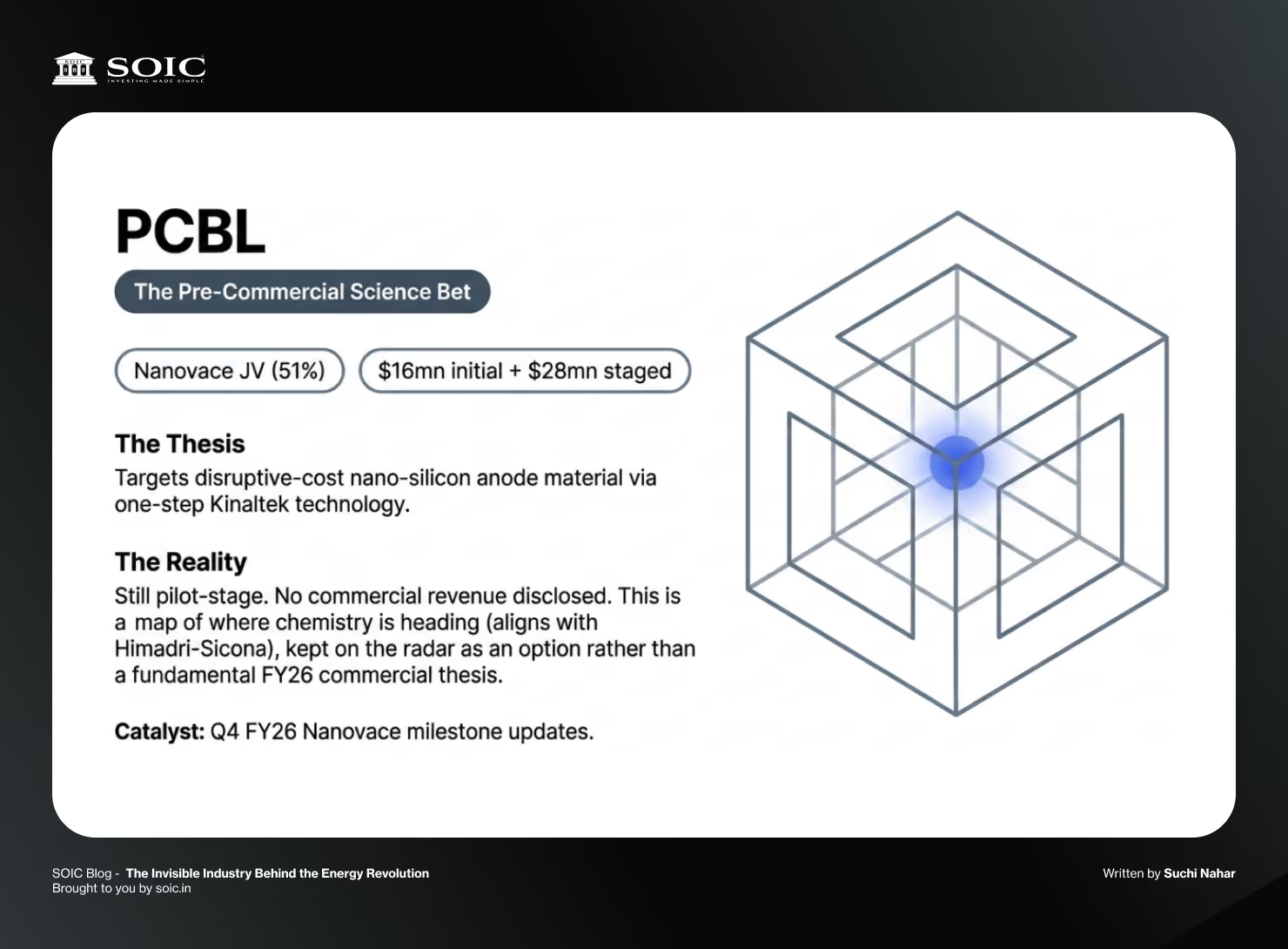
Focused on:
• Conductive carbon materials
• Acetylene black
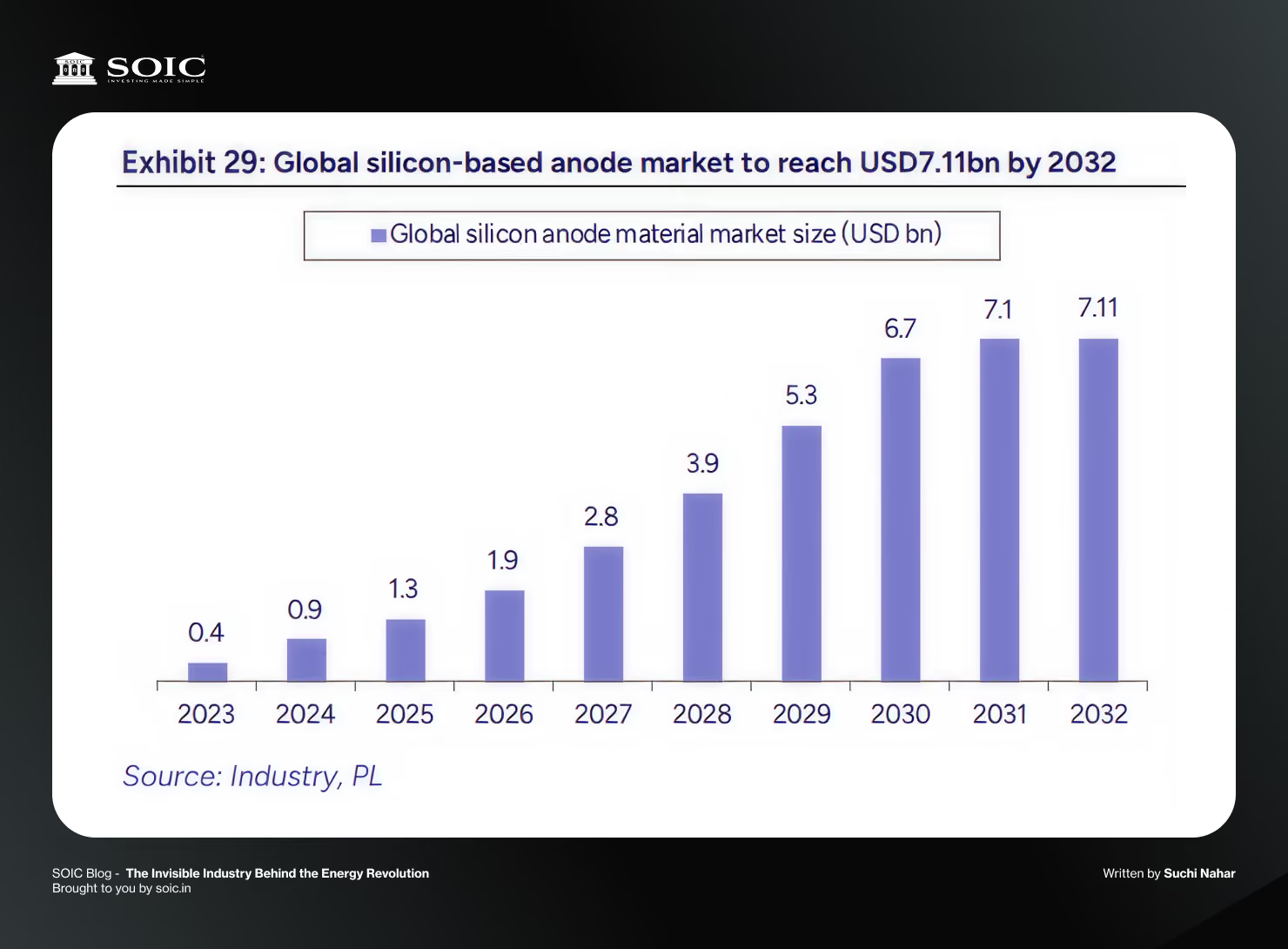
• Nano silicon technologies
A relatively niche but strategically important layer.
Tatva Chintan
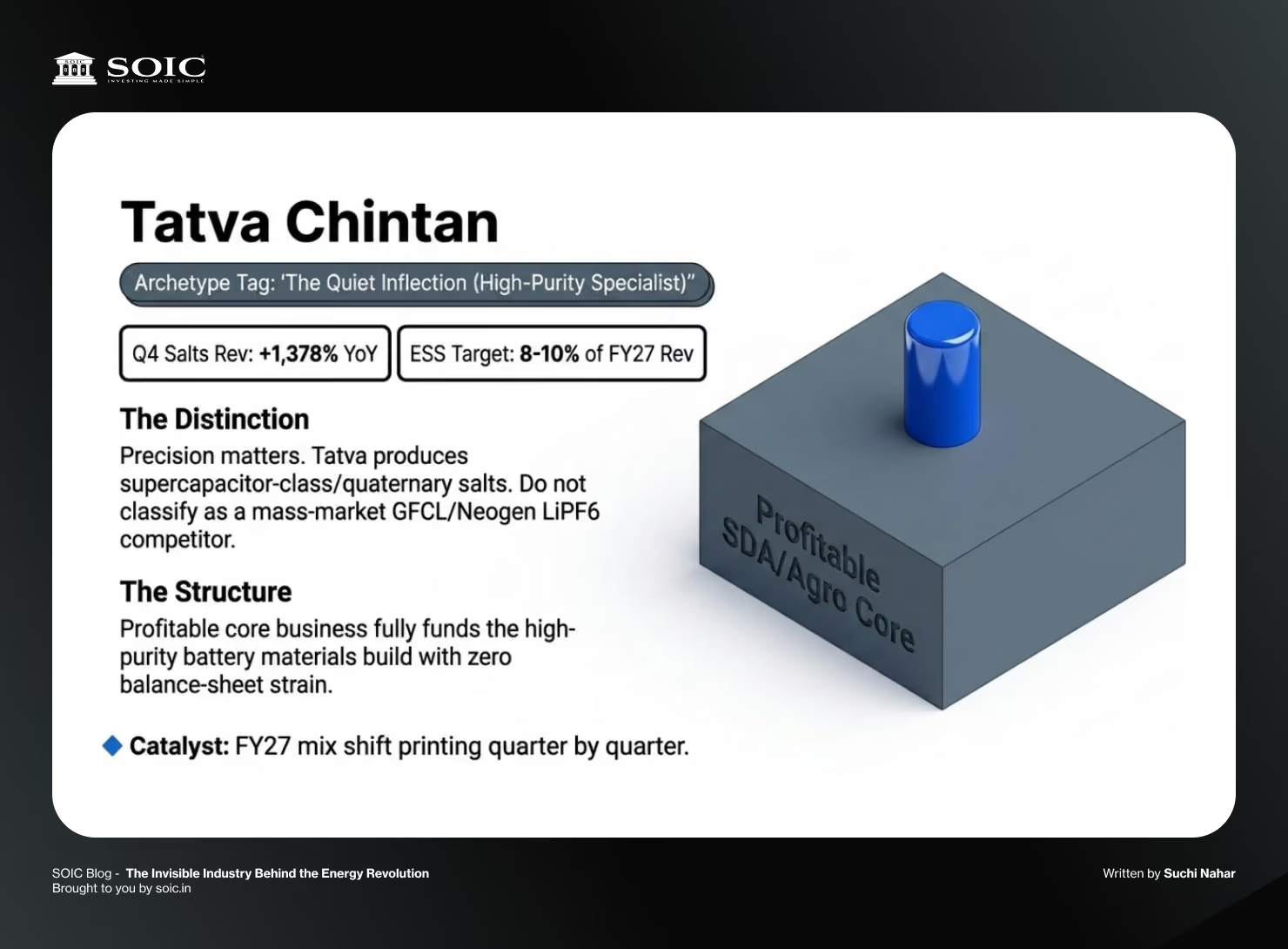
Focused on:
• Electrolyte salts
• Specialty battery additives
Acutaas Chemicals
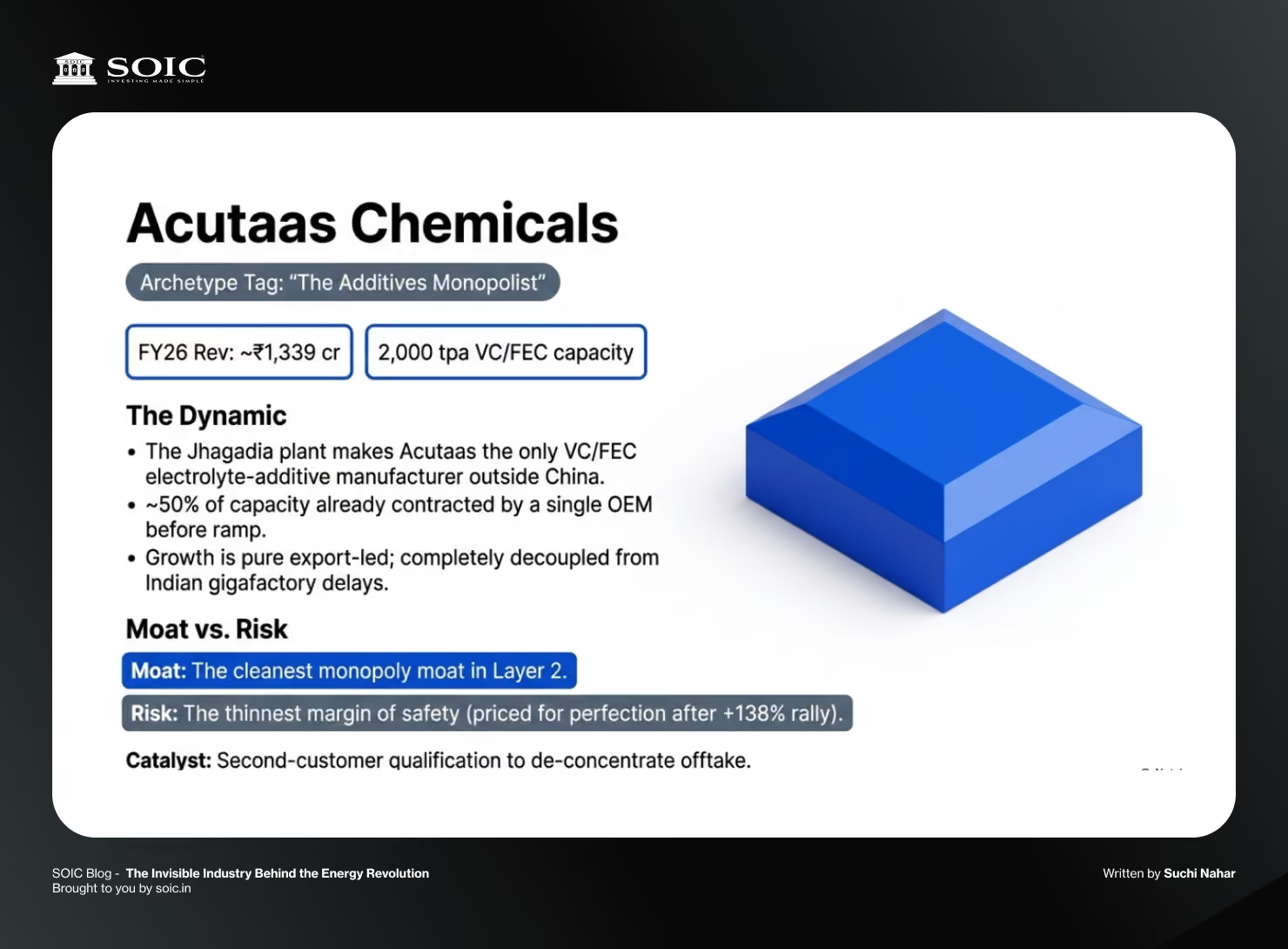
Focused on:
• Battery additives
• VC/FEC chemistry
A niche but high-value segment.
Neogen Chemicals
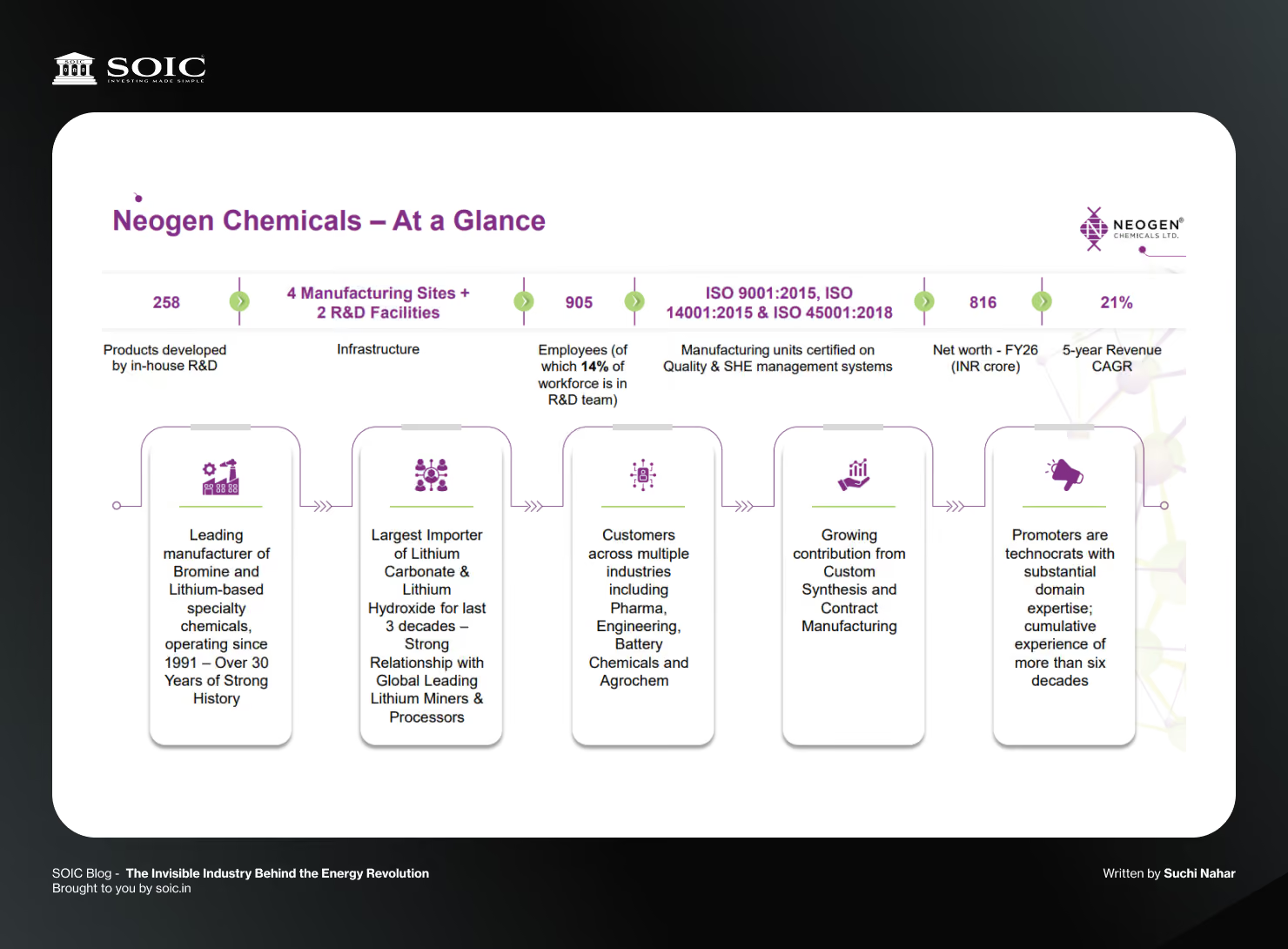
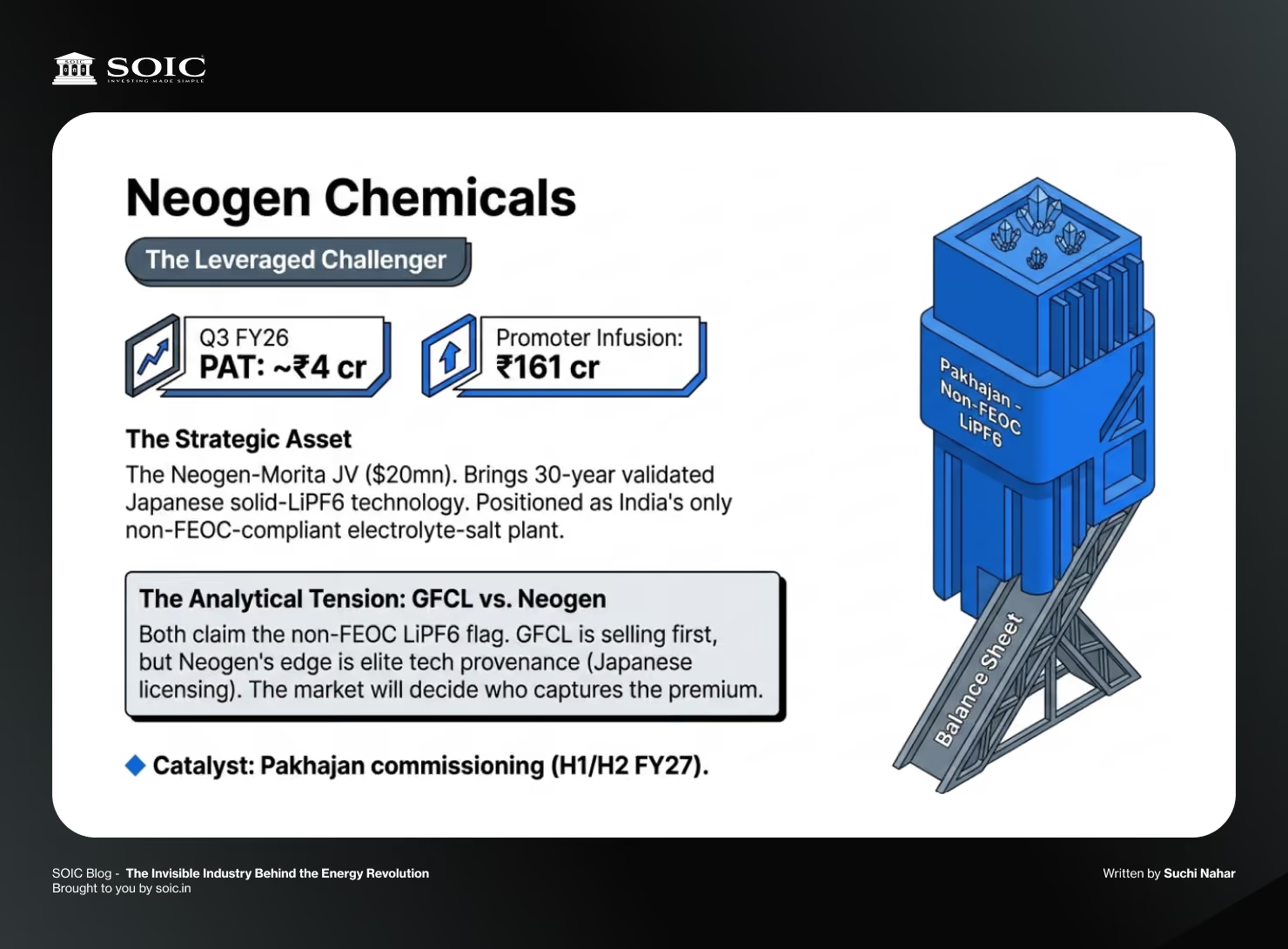
Focused primarily on:
• Electrolytes
• Lithium salts
• Electrolyte additives
• Advanced lithium chemistry
This is where our story begins.
Most investors know Neogen as a battery story. Ironically, batteries are among the newest chapters in the company's history. The company started operations in 1991.
Its initial focus was not electric vehicles. Its focus was lithium chemistry and bromine chemistry. This detail matters, because Neogen did not discover lithium because of EVs. Lithium was already part of its DNA.
For over three decades, the company built expertise in:
• Lithium salts
• Bromine derivatives
• Organolithium compounds
• Specialty intermediates
• Custom synthesis
Long before battery chemicals became fashionable. This is one of the reasons management believed it could succeed where others might struggle.
Battery materials are fundamentally a chemistry challenge before they become a manufacturing challenge. Neogen already understood the chemistry.
Every company eventually faces a defining capital allocation decision.
• For Infosys, it was global delivery.
• For Asian Paints, distribution.
• For Dixon, manufacturing scale.
• For Neogen, it is battery materials.
Management created a dedicated subsidiary: Neogen Ionics.
Its purpose was simple: build India's largest integrated battery-material platform. This was not a small experiment. This was a transformation project. The scale is staggering.
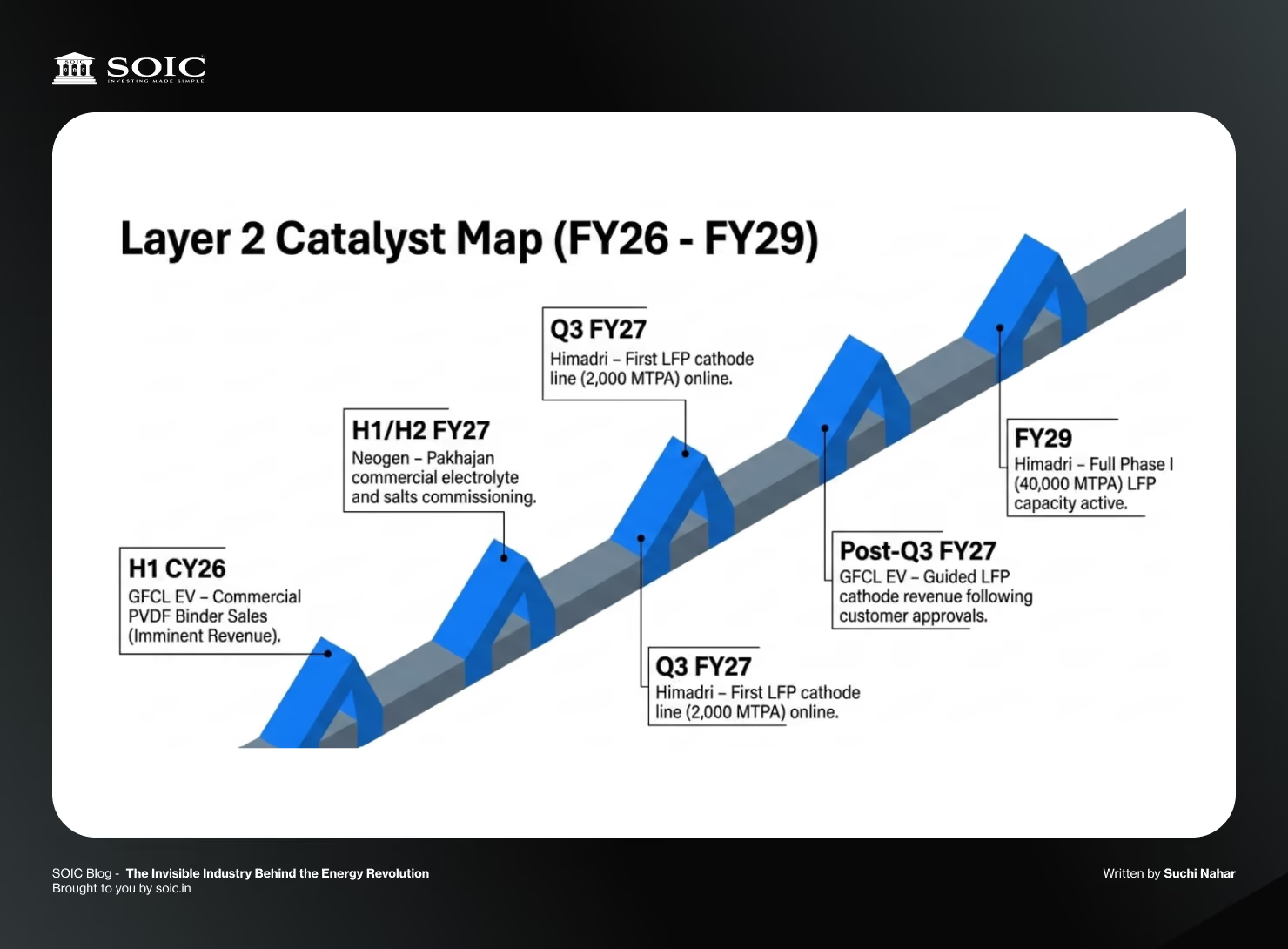
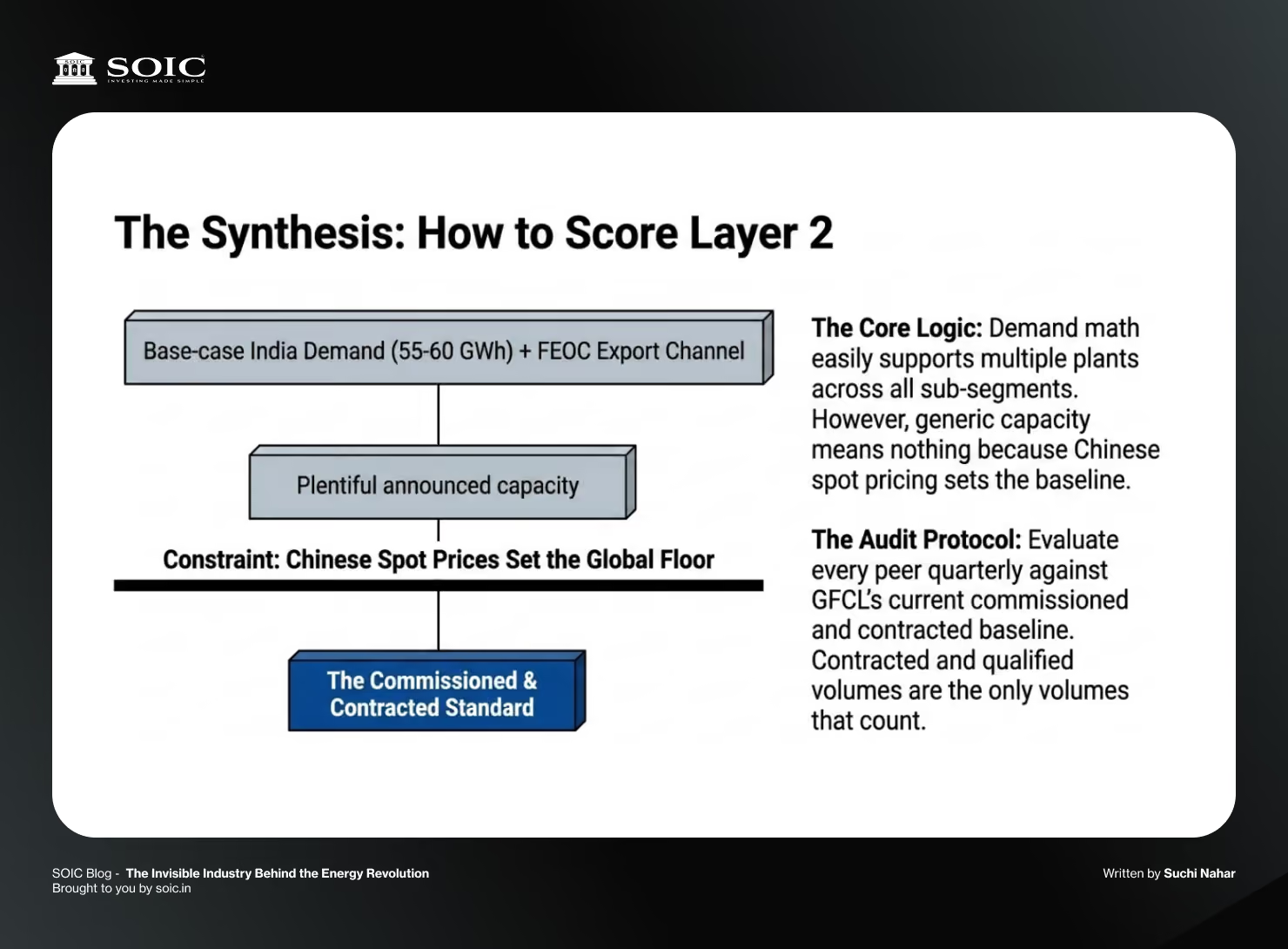
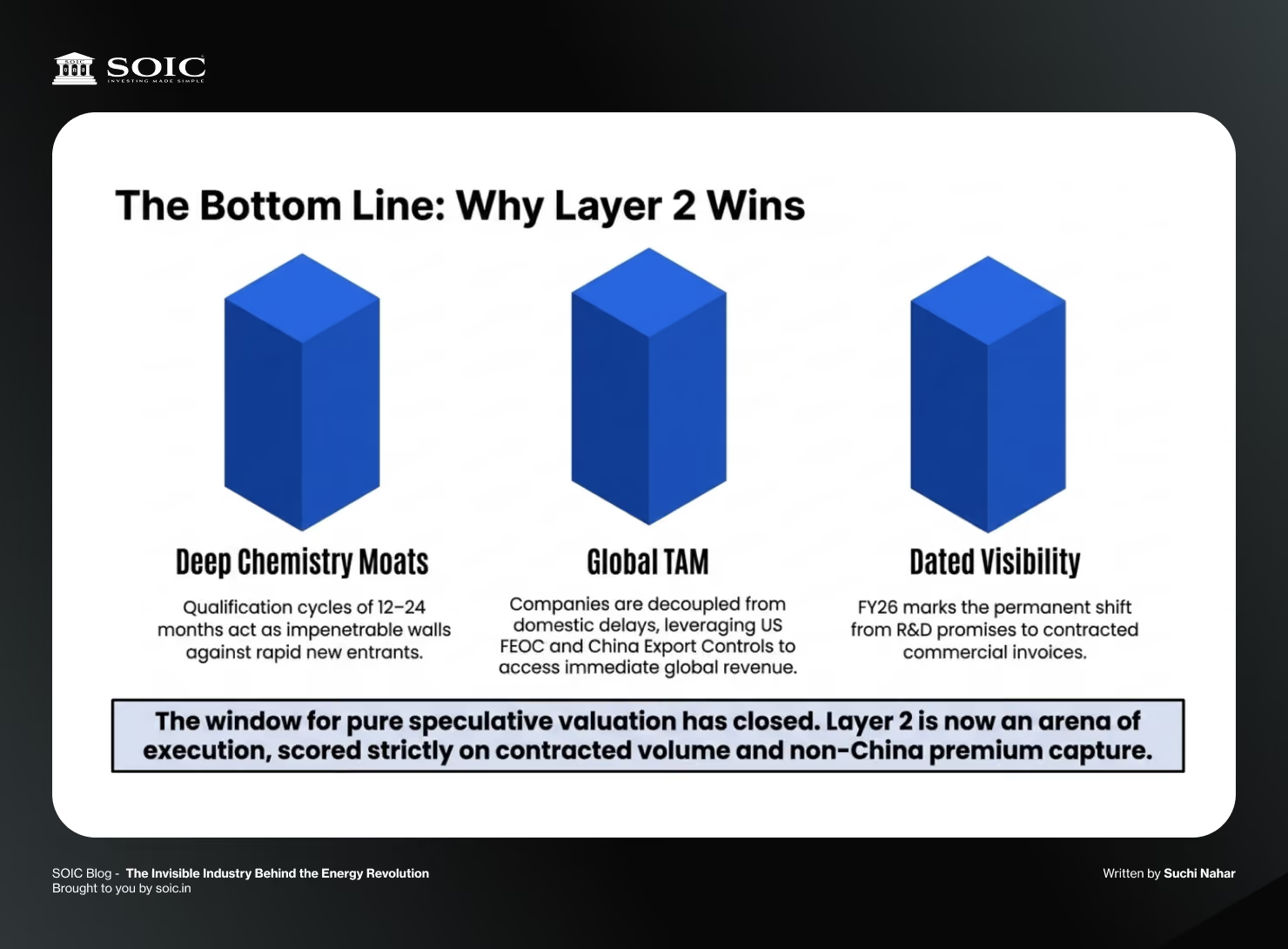
At Pakhajan, Gujarat, Neogen is constructing one of India's largest battery-material facilities.
Planned capacities include:
• Electrolytes - 32,000 MT
• Lithium Salts & Additives - 5,500 MT
The total investment has risen from roughly ₹1,500 crore to nearly ₹1,795 crore. For a company of Neogen's size, this is a massive bet. Management is effectively investing several years of future earnings into an opportunity that has not yet fully materialised.
The reward could be transformational. The risk is equally significant.
Many companies can build factories. Few can build competitive battery-material businesses. Neogen's confidence rests on several pillars.
Pillar 1: Thirty Years Of Lithium Expertise
Most competitors entered battery materials because EVs became fashionable. Neogen has been working with lithium chemistry for decades.
This provides:
• Process expertise
• Safety know-how
• Customer credibility
• Manufacturing experience
Chemistry businesses often reward accumulated knowledge, and Neogen has accumulated a lot of it.
Pillar 2: MU Ionic Solutions Partnership
Battery materials are not commodity chemicals.
• Technology matters.
• Plant design matters.
• Consistency matters.
Neogen partnered with Japan's MU Ionic Solutions for electrolyte technology. Industry experts suggest that the plant design itself may become a competitive advantage because it improves consistency and reliability.
That matters enormously in battery manufacturing, because reliability is often more important than price.
Pillar 3: Morita Partnership
This may be the most important piece of the puzzle. Morita brings expertise in lithium salts, particularly LiPF6. This is arguably the most important chemical inside modern lithium-ion electrolytes.
According to industry experts, the real value addition in battery chemicals may ultimately lie in lithium salts rather than electrolyte blending itself. That insight explains why Neogen expanded into salts instead of stopping at electrolytes. They want to control the highest-value layer of the chain. Not merely assemble imported components.
Consider the value chain:
Lithium Salt
↓
Electrolyte
↓
Battery Customer
Most companies focus on the middle. Neogen wants to own the foundation, because whoever controls the salt controls a large part of the economics.
This is similar to semiconductor manufacturing. The real value often sits deeper than investors initially realise.
Battery materials are not sold. They are qualified. This distinction is crucial.
Anyone can announce capacity. Few can get approved.
Recent disclosures suggest meaningful progress:
• One Indian gigafactory is already sourcing commercial quantities.
• Another customer has completed qualification.
• Additional customers are evaluating products.
• Multiple international audits have been completed.
This is where the story begins moving from narrative to evidence. Investors should pay close attention because customer qualification is often the strongest predictor of future revenue.
The numbers illustrate management's confidence. Battery-material revenue:
FY26: approximately ₹36 crore
FY27 target: more than ₹300 crore
Long-term aspiration: ₹2,500–2,900 crore
If achieved, battery materials could become larger than Neogen's legacy specialty chemical business. That is why management is investing aggressively. They are not chasing incremental growth. They are attempting to build a new company inside the existing company.
The Moment Of Truth: Can Neogen Actually Crack It?
"Every great investment story eventually reaches a point where narrative meets reality. For Neogen, that moment has arrived."
For years, Neogen's battery ambitions were easy to dismiss.
The company had:
• A vision
• A technology partner
• A large capex plan
• An exciting presentation
What it didn't have was proof.
• No meaningful revenues.
• No large customer base.
• No commercial scale.
No evidence that customers would actually buy from an Indian electrolyte supplier when China already dominated the market. That is changing, that is why the next three years may determine the company's future.
One of the most dangerous mistakes investors make is confusing capacity with demand. Building a battery chemical plant is difficult. Filling it is much harder. History is full of examples.
Companies build:
• Steel plants
• Solar module factories
• Textile units
• Chemical facilities
Then discover demand arrives slower than expected. The real challenge is not production. The real challenge is utilisation.
This is where Neogen's story becomes interesting, because recent disclosures suggest the company is beginning to move beyond capacity announcements and into customer acquisition.
Perhaps the most important thing investors should understand about battery chemicals is this: Battery manufacturers do not buy products. They buy reliability.
A battery cell manufacturer is not interested in a supplier's PowerPoint presentation.
They care about:
• Consistency
• Purity
• Qualification
• Performance
• Safety
The qualification process can take months. Sometimes years. A single impurity can result in rejection.
This is why customer qualification is arguably the most important metric in the entire industry.
Recent developments suggest Neogen has made meaningful progress. Management disclosed that one Indian gigafactory is already sourcing commercial quantities of electrolyte. More importantly, Neogen is currently the sole supplier.
The customer's capacity is expected to increase from approximately 1 GWh to 5 GWh over time. Another customer has completed qualification.
Pilot production is expected to begin shortly. Additional customers are currently evaluating Neogen products against Chinese suppliers. This may sound incremental. It is not, because every qualification increases the probability of future recurring revenue.
Most investors assume Neogen's future depends on Indian EV adoption. This may not be entirely true.
In fact, the biggest opportunity may come from outside India. The battery-material industry is experiencing a structural shift.
Global customers increasingly want:
• China+1 suppliers
• Non-FEOC suppliers
• Diversified sourcing networks
This is where Neogen's international audits become important. Multiple US electrolyte manufacturers have already completed site audits. Additional international customers have provided provisional approvals.
These developments suggest Neogen's addressable market could eventually become much larger than India's domestic battery ecosystem. The real prize may not be supplying Indian gigafactories. The real prize may be becoming a globally qualified battery-material supplier.
Every exciting industry eventually becomes competitive. Battery chemicals are no exception. The next decade may witness one of the most fascinating competitive battles in Indian specialty chemicals. The battle for battery materials.
If Neogen is the specialist, Gujarat Fluorochemicals is the integrated giant. The company is attempting to build one of the broadest battery-material platforms in India.
Its portfolio spans:
• LiPF6
• Electrolytes
• LFP cathode materials
• PVDF binders
• Anode materials
Commercial LiPF6 sales have already commenced. Repeat orders have already been secured. International validations have already occurred. In many ways, GFCL represents the benchmark Neogen must surpass.
The battle between: Neogen + Morita versus GFCL EV may become one of the defining stories of India's battery-material industry.
Many investors assume battery chemicals will behave like traditional commodity chemicals. That assumption may prove wrong. Battery materials possess characteristics of both: Commodity industries and Specialty chemical industries.
Like commodities:
• Prices fluctuate
• Capacity matters
• China influences margins
Like specialties:
• Qualification matters
• Switching costs exist
• Customer relationships matter
This hybrid nature creates both opportunity and risk. Companies with technology, relationships and execution may generate attractive economics. Companies without them may struggle despite building large capacities.
This is the central question. Management has outlined a long-term battery-material revenue opportunity of ₹2,500–2,900 crore. To appreciate the magnitude of this number, consider what it implies.
A few years ago, battery materials did not exist as a meaningful business for Neogen. Today management believes it could become larger than the legacy specialty chemical business.
This is not expansion. This is a transformation.
Scenario Analysis: Rather than thinking in terms of certainty, investors should think in scenarios.
Bear Case
What if:
In such a scenario:
Base Case
What if:
In this scenario:
Battery materials become a meaningful growth driver. Revenue scales. Margins improve.
The investment begins generating acceptable returns. Neogen evolves into a leading Indian electrolyte player.
Bull Case
What if:
In this scenario:
Most investors spend enormous time discussing competition. Few discuss technology, that may be a mistake because the battery industry evolves rapidly. Today's dominant chemistry is lithium-ion, tomorrow may not be.
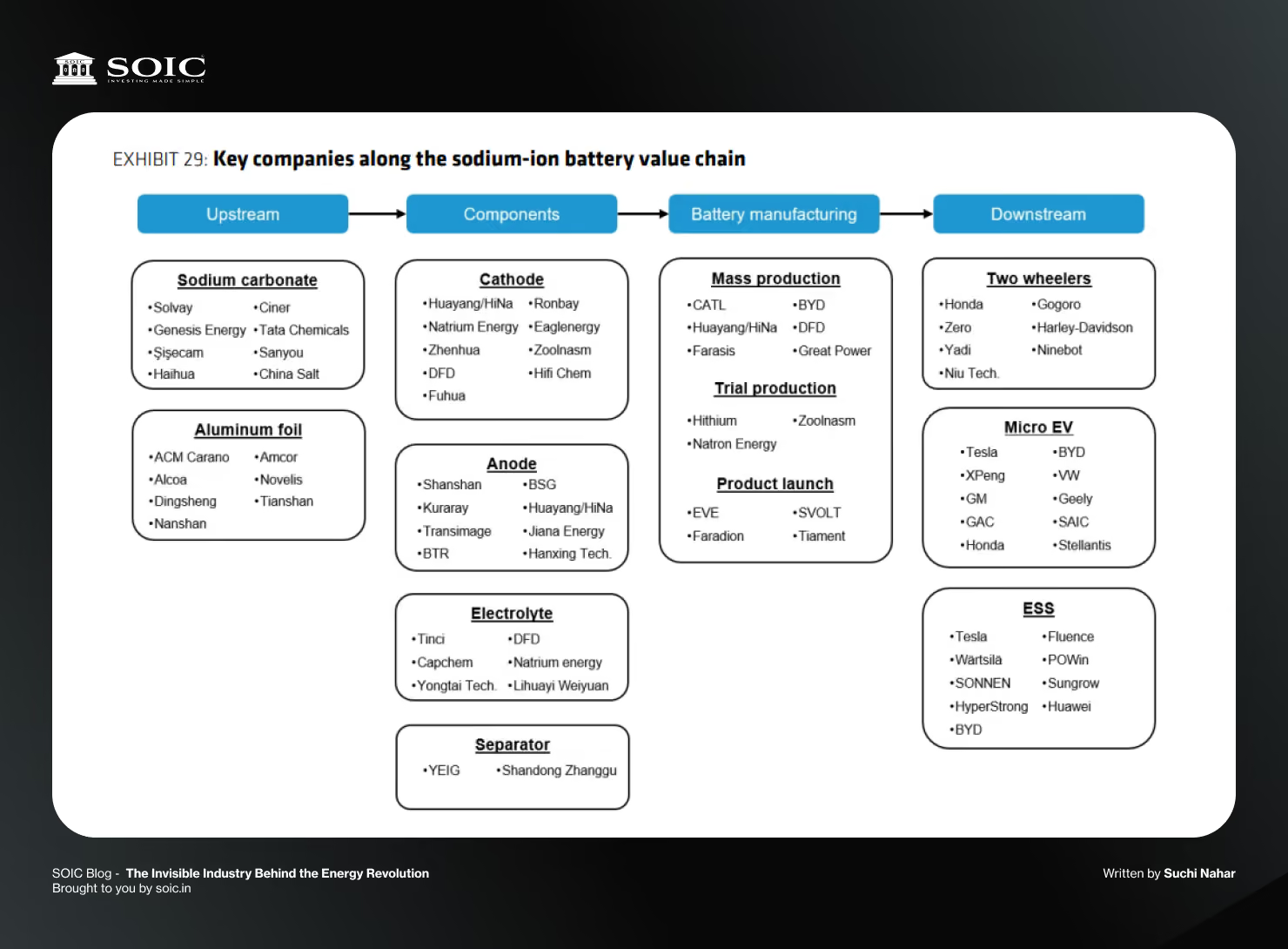
For years, lithium-ion appeared unchallenged. Recently, sodium-ion batteries have begun attracting attention.
Why? Because sodium is:
• Abundant
• Cheaper
• Easier to source
Battery costs have fallen rapidly. Cycle life has improved significantly. Energy storage systems are becoming an attractive application. This does not mean lithium-ion disappears. But it does mean battery chemistry continues evolving.
The biggest risk to every battery-material company is assuming today's chemistry remains dominant forever. The history of technology rarely works that way.
Every great opportunity requires capital. Neogen's battery ambitions are no exception. The company is investing nearly ₹1,800 crore into battery materials. That number is enormous relative to the company's historical size. The logic is understandable. Building capacity before demand arrives creates a first-mover advantage. But it also creates financial risk.
If demand arrives slower than expected:
• Interest costs rise
• Returns get delayed
• Balance sheet pressure increases
Investors should monitor this carefully, because execution is not only operational. It is financial.
Most investors watch:
• Revenue
• EBITDA
• PAT
Those numbers matter, but they are not the most important metrics today.
Instead track:
Customer Qualifications, the strongest leading indicator.
• Electrolyte Volumes.
• Proof of demand.
• Salt Production
• Proof of integration.
• New Customer Additions
• Evidence of acceptance.
• Capacity Utilisation
• Evidence of execution.
• Debt Levels
•Evidence of financial discipline.
Everything else is secondary.
When investors look at Neogen today, they often see a specialty chemical company. Management sees something else. They see an opportunity to become a strategic layer of the global battery supply chain.
The company has:
✓ Lithium expertise
✓ Japanese technology
✓ Global partnerships
✓ Customer traction
✓ Manufacturing assets
✓ Regulatory tailwinds
What remains uncertain is whether these ingredients are enough, because chemistry alone does not create great businesses. Execution does.
The next three years will determine whether Neogen becomes a battery-material champion or simply another company that invests ahead of demand.
Neogen is no longer just a specialty chemical firm, but a bet on India’s role in the global battery supply chain. The company has developed more than 30 years of expertise in lithium chemistry and is now making its biggest-ever capital investment to play in a market that could shape the next industrial decade.
Whether this will be one of the most successful transformations in Indian specialty chemicals or an ambitious bet ahead of its time depends on a simple question: "Will demand arrive fast enough to justify the capacity being built today?" The answer lies not in quarterly earnings, but in customer qualifications, plant utilisation and India's ability to become a meaningful alternative to China in the battery materials ecosystem.
The information provided is for educational purposes only and should not be considered investment advice. We are SEBI-registered research analysts.
We believe that investment decisions should be based on personal conviction and not borrowed from external sources. Therefore, we do not assume any liability or responsibility for any investment decisions made based on the information provided in this reference.



0 Comments